

What we deploy, you can inspect.

Three building blocks, each with its real maturity level. We never present anything as ready if it is not.

  1. Roadmap
  2. Under constructionSeshatOSSeshatCloud
  3. Beta
  4. AvailableSeshat

Seshat

Available

Open source runtime, Apache-2.0. The terminal interface reuses code from Crush (FSL-1.1-MIT license).

See the code

The agent runtime in Go. It is the foundation of the two other blocks, and can be used on its own by technical teams.

  • Tools, sessions, permissions and sandbox.
  • About fifteen model providers, MCP, skills and RAG.
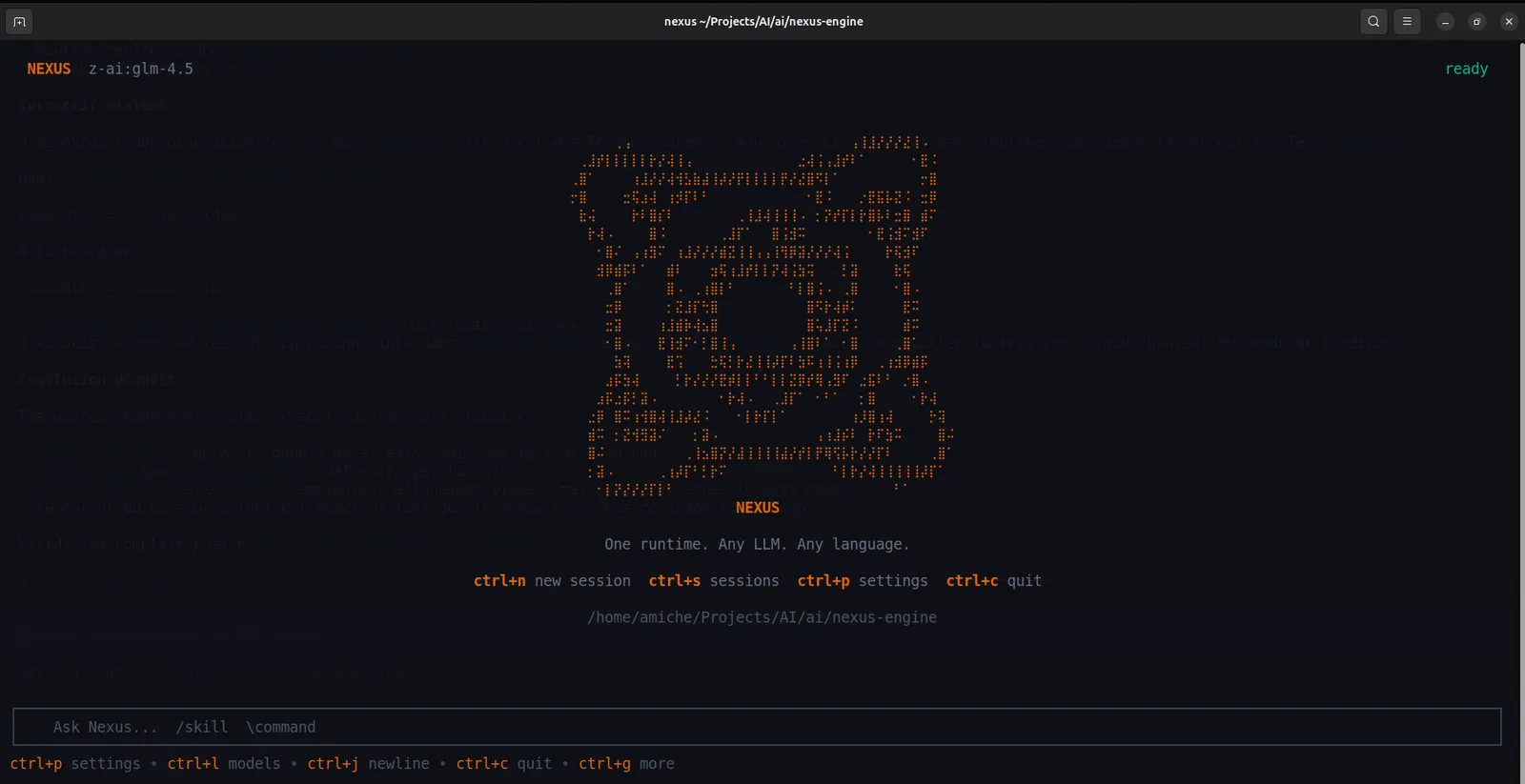
  • Terminal interface (seshat chat), command line, gRPC and SDK.

Version 1.3, installable today, with its terminal interface.
SeshatOS

Under construction

Source-available: free to use and host, not for resale.

See the code

A local, self-hosted AI environment, on your computer or your server: a Go backend and a desktop application.

  • Chat and Projects, with skills and tools, already run locally.
  • Search across your documents from the Chat. Your documents stay on your machine.
  • Dedicated screens (knowledge, scheduling, administration) come next.

Public on GitHub. Chat and Projects are usable, the rest is under construction.

SeshatCloud

Under construction

Source-available. Commercial agreement above a threshold. License being finalized.

Private repository for now

The multi-user layer on top of the same runtime: the one you need when AI has to be shared across a whole company.

  • Organizations, access rights and account provisioning (SCIM).
  • Administration console and scheduled tasks.
  • Document reading and evaluation of search quality.

Solid on the server side, not yet offered on its own.

Seshat in your terminal, installable today.

No need to wait for the rest: seshat chat opens a full interface for long agent sessions, with your own model keys, on your machine.

Installation
$ curl -fsSL https://raw.githubusercontent.com/KPO-Tech/seshat/main/scripts/install.sh | bash
$ seshat chat
See the code and the documentation

Knowledge-to-Actiona pilot, not a finished product.

This first use case is built with you, on your documents. The Knowledge interface does not exist yet: sourced search is used today from the Chat.

Ask a question

Get a sourced answer on your documents, with everyone's access rights.

Spot the gaps

Find outdated, contradictory, duplicated or missing content.

Act with validation

Propose an update, a task or an answer, subject to human validation.

See what fits your company.

The assessment says which building block, which market tool or which development fits your need best.

Request an assessment